Right to Refusal

Keon
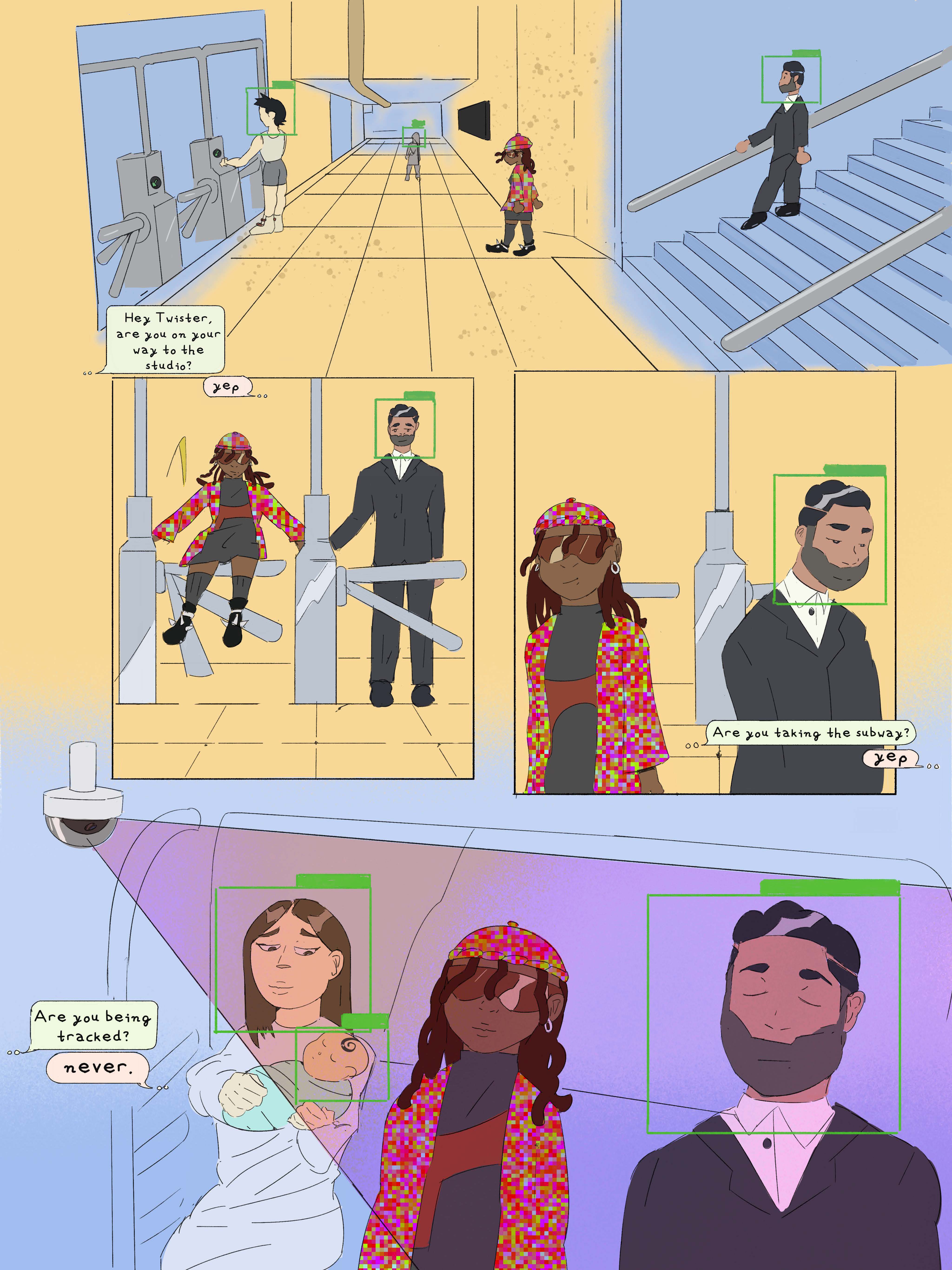
Right to Refusal, comic page 1. Green facial-tracking boxes follow people through a subway station. Twister, wearing brightly patterned clothing and sunglasses, vaults a turnstile beside a suited acquaintance. ‘Hey Twister, are you on your way to the studio?’ ‘Yep.’ ‘Are you taking the subway?’ ‘Yep.’ On the train, camera boxes surround other passengers but not Twister. ‘Are you being tracked?’ ‘Never.’
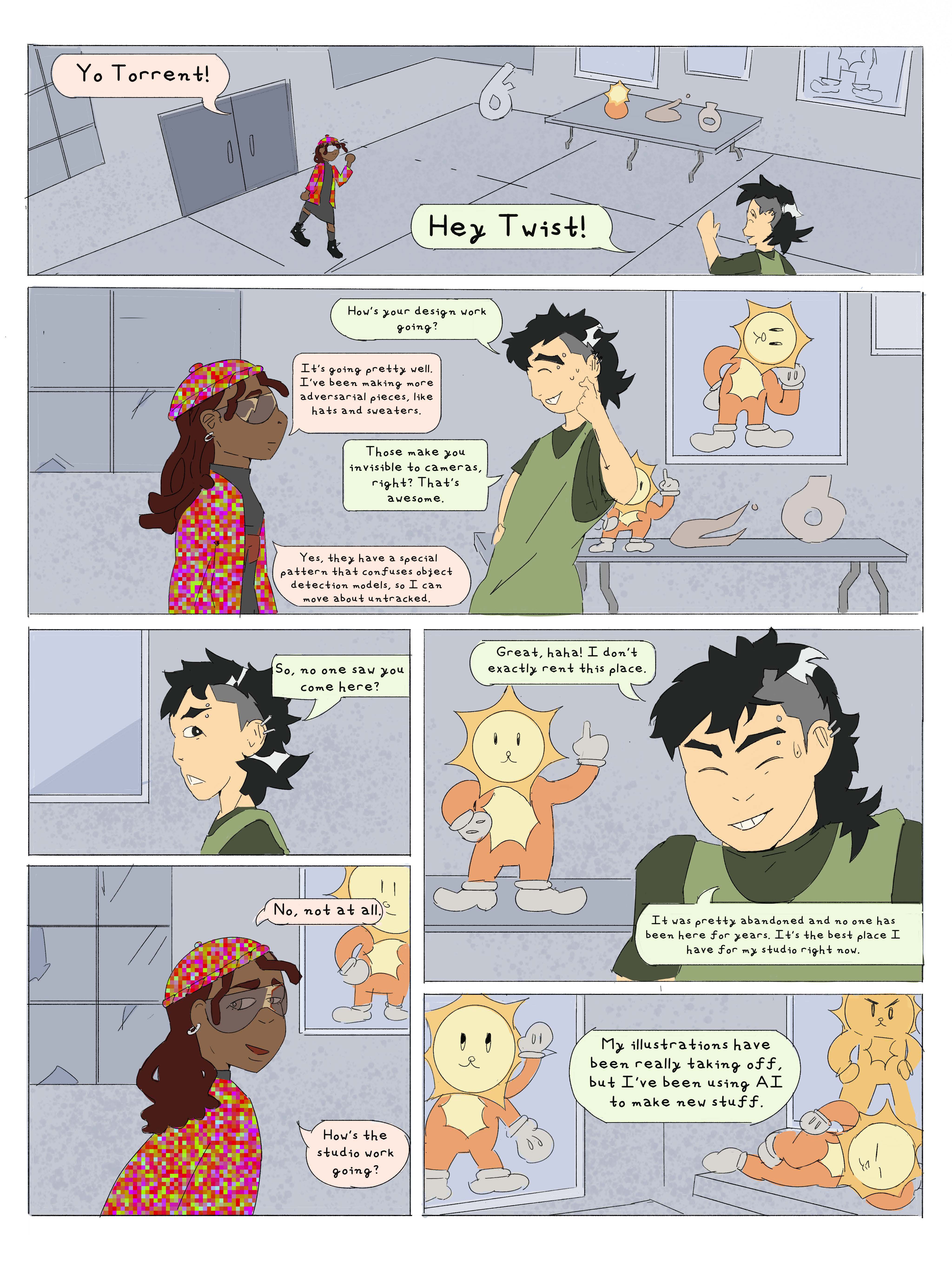
Right to Refusal, comic page 2. Twister visits Torrent’s art studio, full of drawings and sculptures of a sun character. Twister has been making adversarial hats and sweaters whose patterns confuse object-detection models, allowing untracked movement. Torrent is relieved nobody saw Twister enter: the studio is an abandoned place they do not exactly rent. Torrent says their illustrations are taking off, but they have also been using AI to make new work.
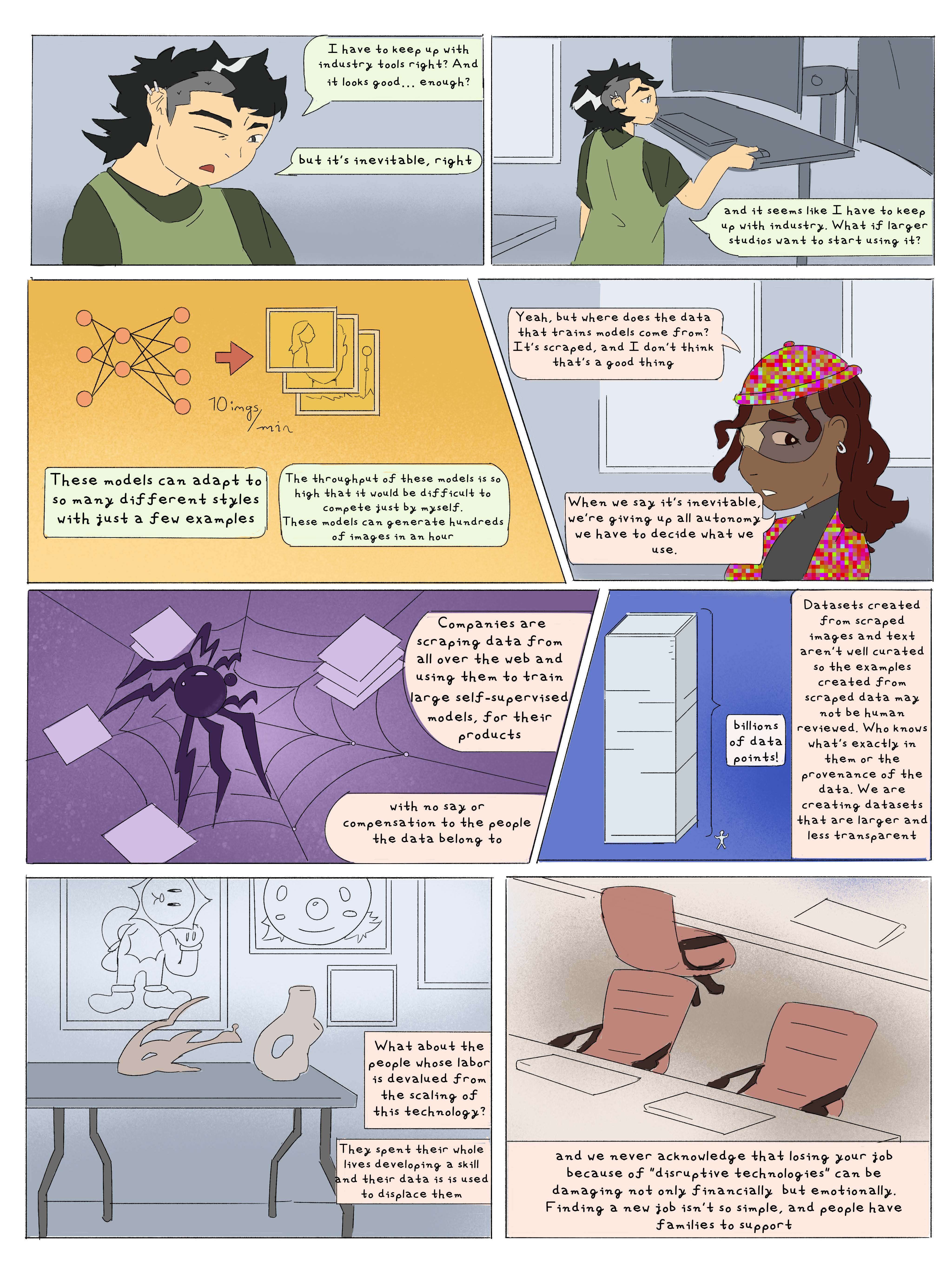
Right to Refusal, comic page 3. Torrent worries about keeping up with industry tools and models that generate hundreds of images an hour. Twister questions where the scraped training data comes from and rejects calling adoption inevitable. Diagrams show a neural network producing images, a spider gathering material across the web, huge datasets, and empty office chairs. The discussion addresses missing consent and compensation, opaque unreviewed datasets, devalued artistic labour, and the financial and emotional harm of displaced jobs.
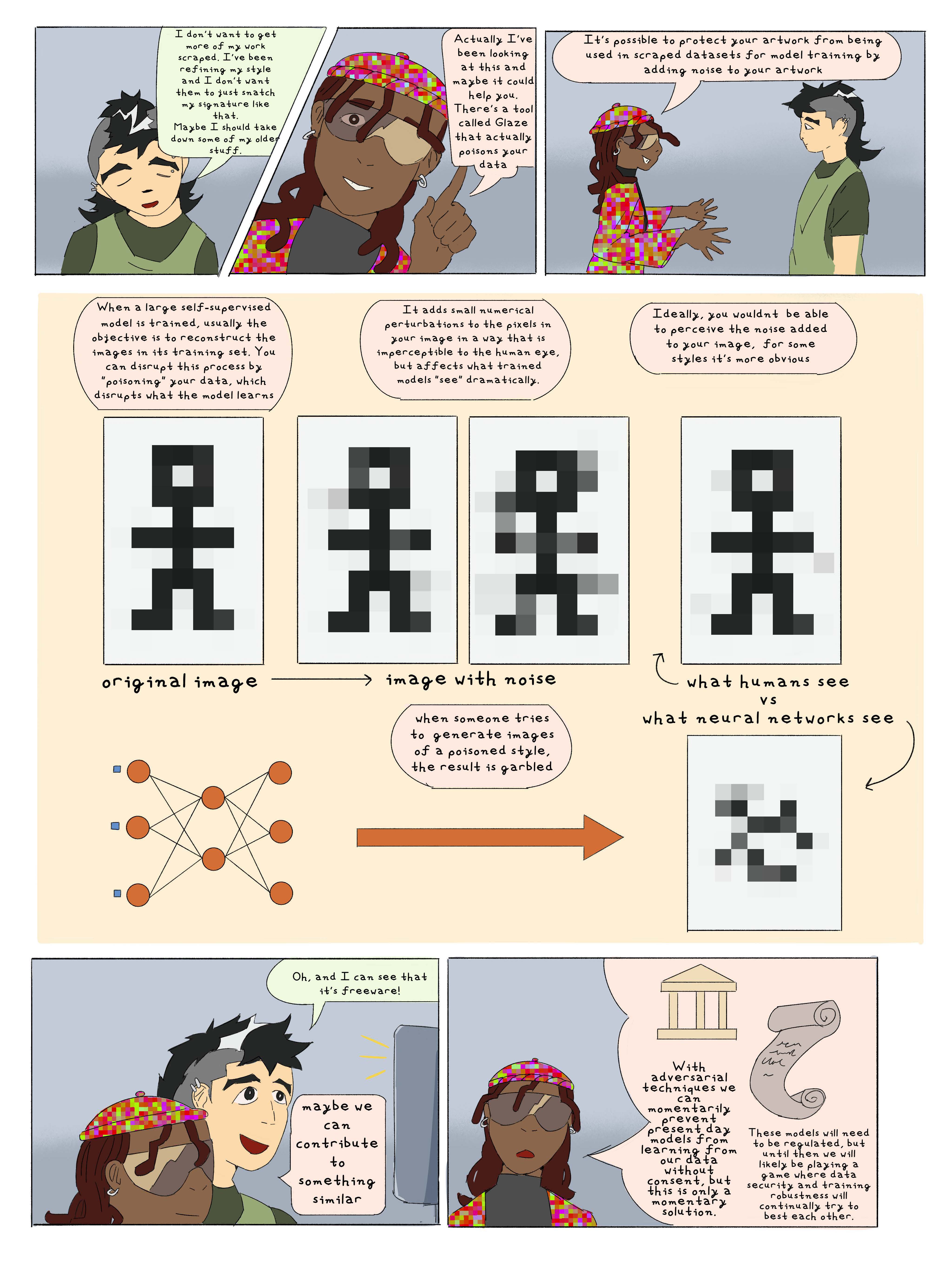
Right to Refusal, comic page 4. Torrent does not want to be replaced or contribute old work to training data. Twister introduces Glaze and adding small pixel perturbations to artwork. A sequence compares an original pixel figure, noisy variants, what humans see, and a garbled neural-network result. Torrent notes that the tool is open source and suggests contributing. Twister cautions that adversarial protections are temporary: retrained models may overcome them, and legal and regulatory change is also needed.
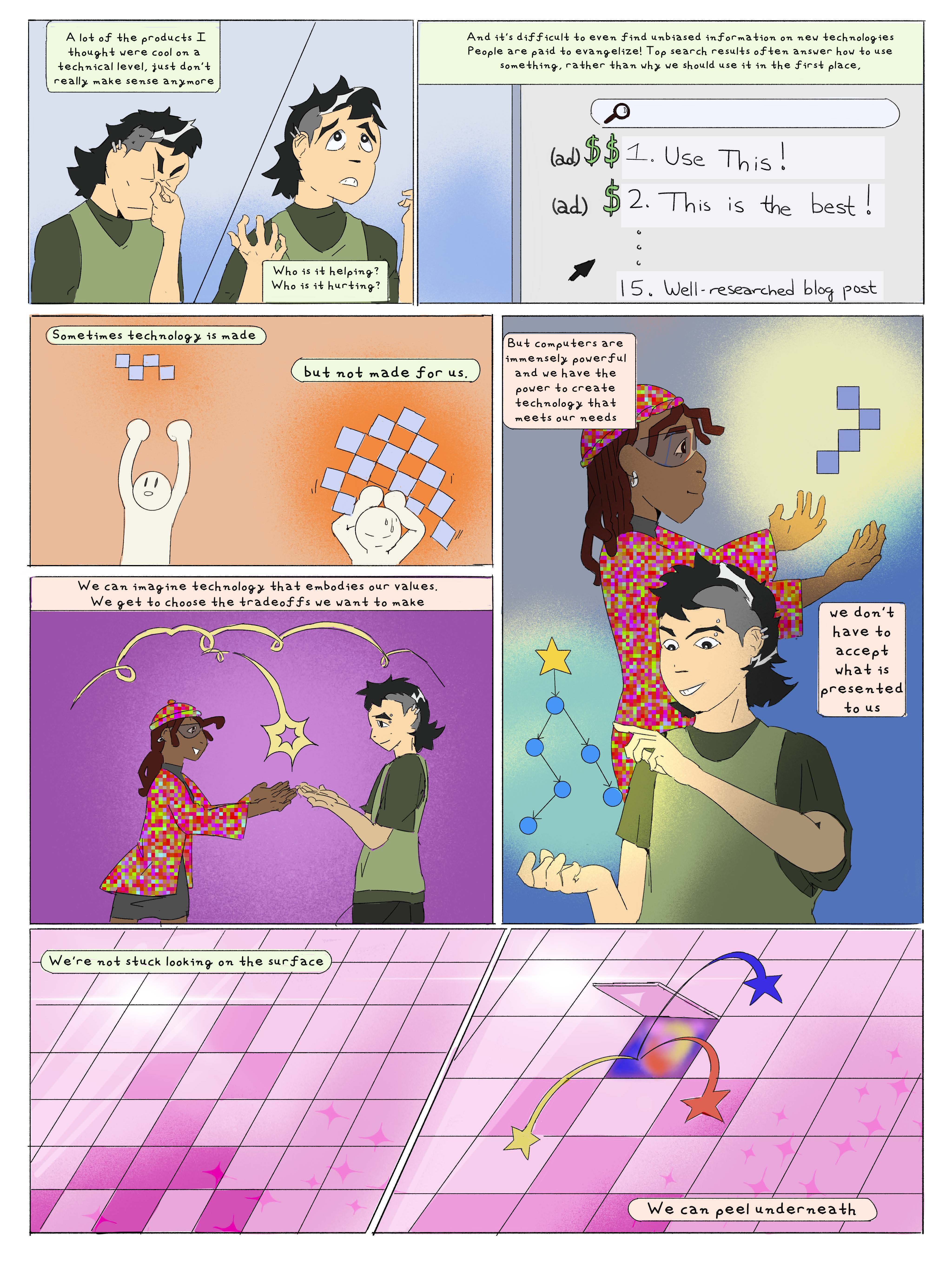
Right to Refusal, comic page 5. Torrent asks of technology, ‘Who is it helping? Who is it hurting?’ A search-results diagram places sponsored claims above a well-researched blog post. The characters say technology is sometimes made, but not made for them; they can create tools that meet their needs and choose their own trade-offs rather than accept what is presented. They hold colourful abstract shapes. A final pink grid peels open to reveal stars beneath: ‘We’re not stuck looking on the surface. We can peel underneath.’

Keon is an Arkansas-born multimedia artist and algorithm engineer living in Brooklyn, New York working within the colorful interplay between technology, fantasy, and reality.
Published by Logic(s) in policy: seductions and silences.