Where does the carceral state end and the welfare state begin?
Over the last decade, a discourse around “care, not cages” has emerged among abolitionists who fight to close jails and prisons. While the sentiment can articulate a demand against ongoing racialized austerity and a vision for a world without carceral punishment, the binary framing of the phrase can also elide an important question: Can the same state that marks certain populations for removal and death be tasked instead with healing and housing them?
There is nothing new about how both the asylum and the prison disappear unwanted people from public spaces. Indeed, today we seem to be on a pendulum swing toward the rebuilding of the asylum. California’s state legislature, with support from Governor Gavin Newsom, has rebranded the state’s forced mental health treatment program, known as conservatorship (equivalent to guardianship elsewhere), as “care.” In 2023, for the first time since its establishment in 1967, the legislature modified the conservatorship law, expanding its definition of “gravely disabled” to target criminalized drug users by including “substance use disorder” as a qualifying condition. This came on the heels of the passage the 2022 Community Assistance, Recovery, and Empowerment (CARE) Act, which requires every county in California to open specialized courts whose explicit aim is to remove houseless people from public space; this occurs under the auspices of offering “treatment” in the form of a court-ordered “care plan” that is also a pipeline to referral for conservatorship.
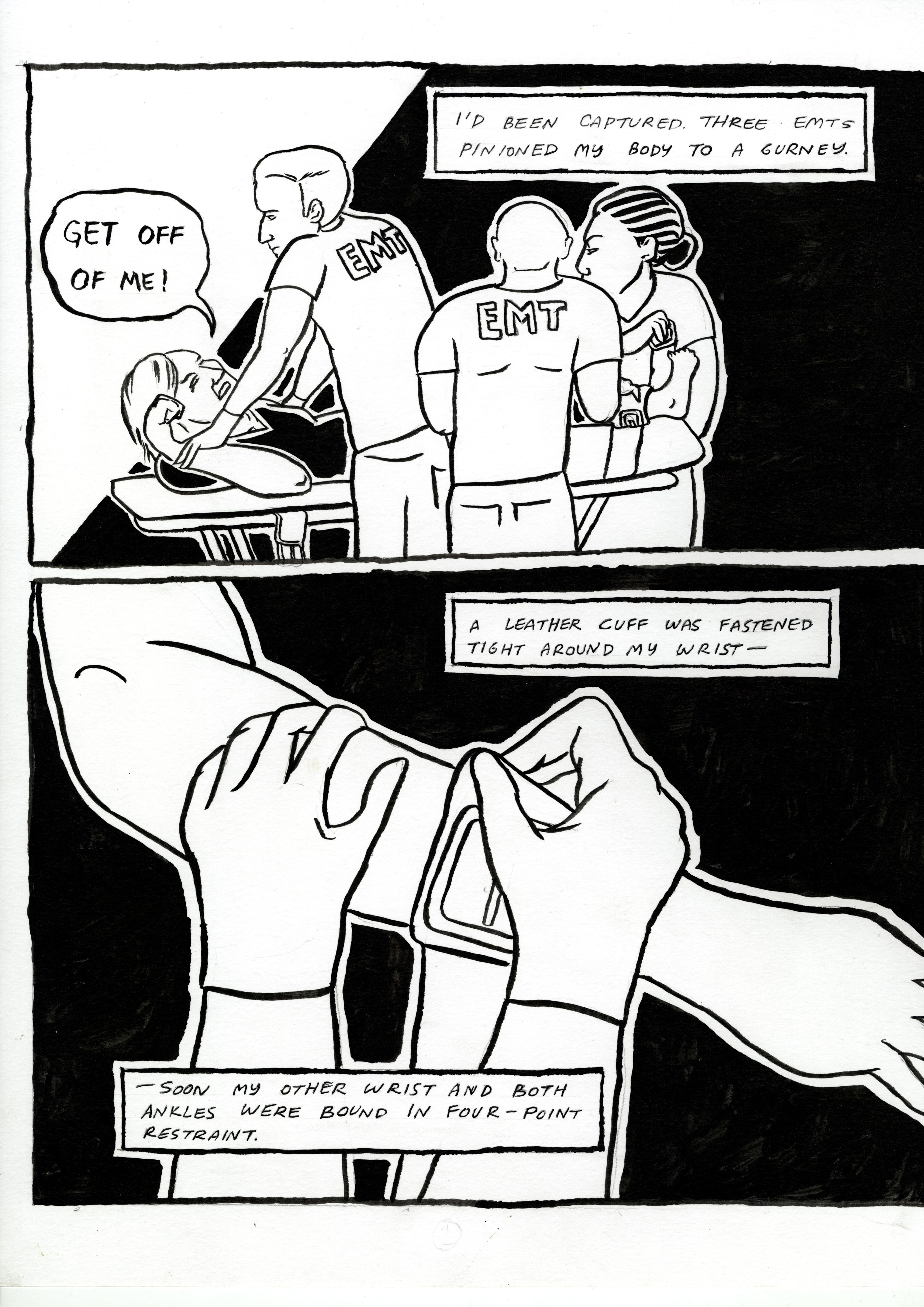
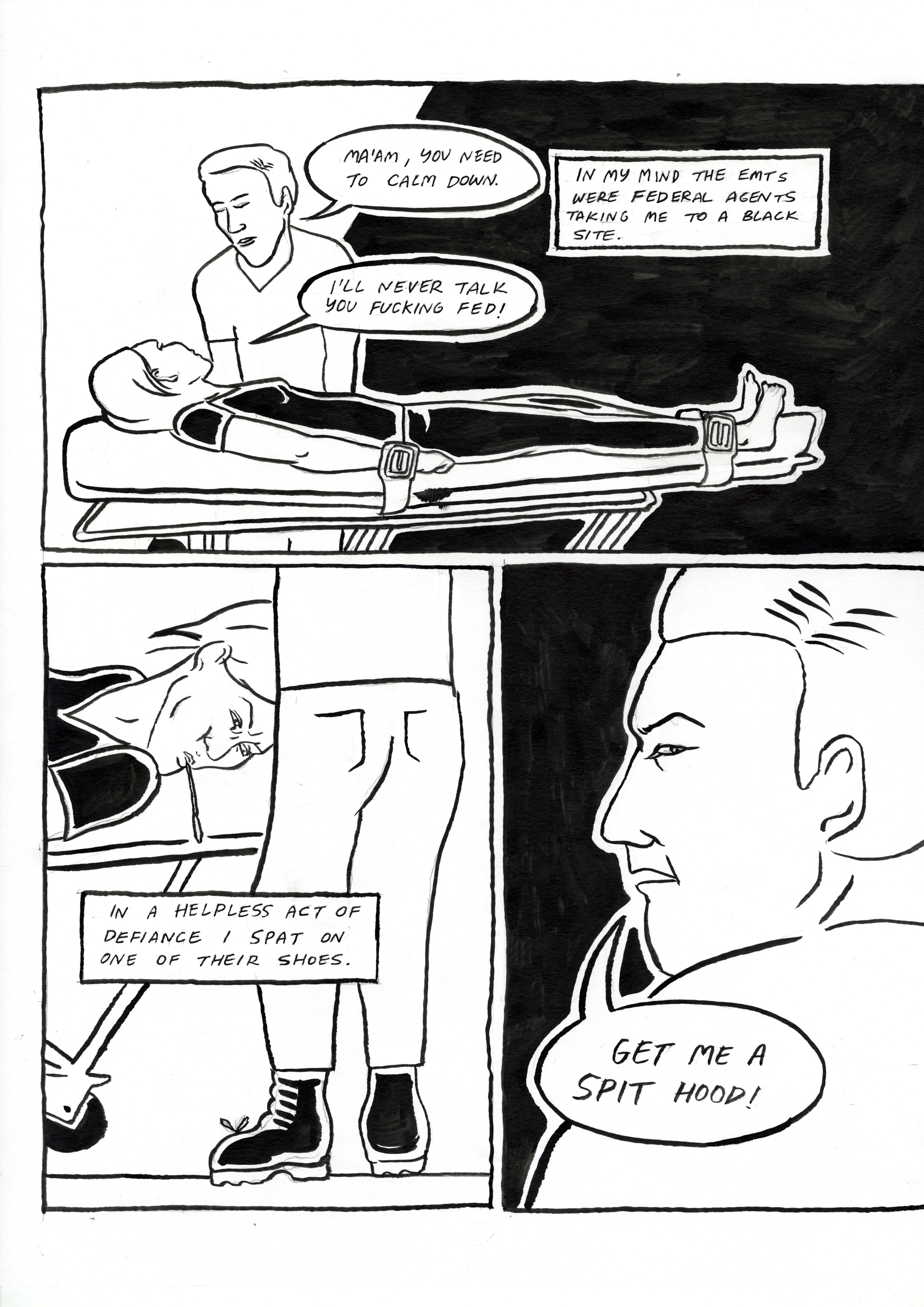
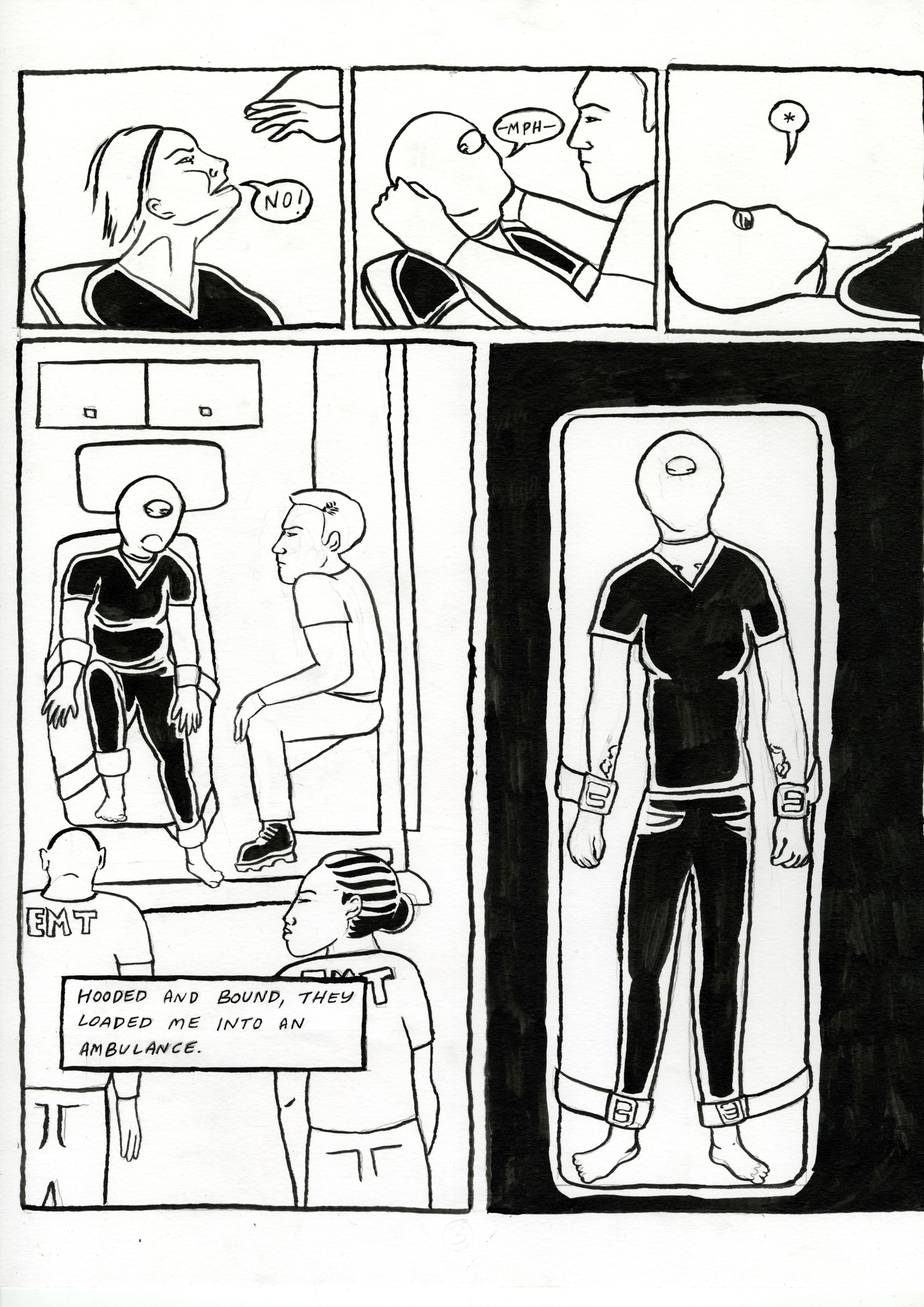
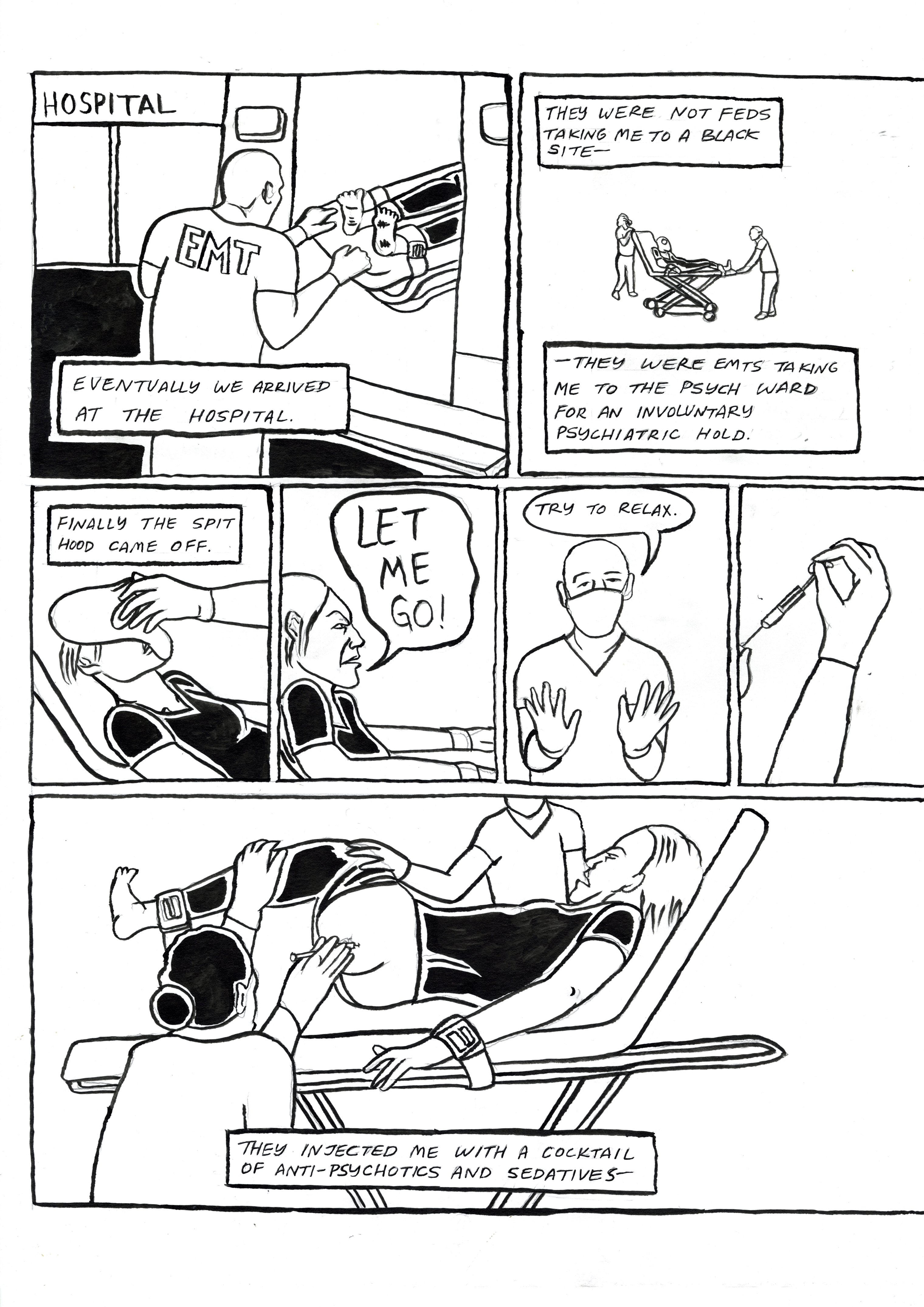
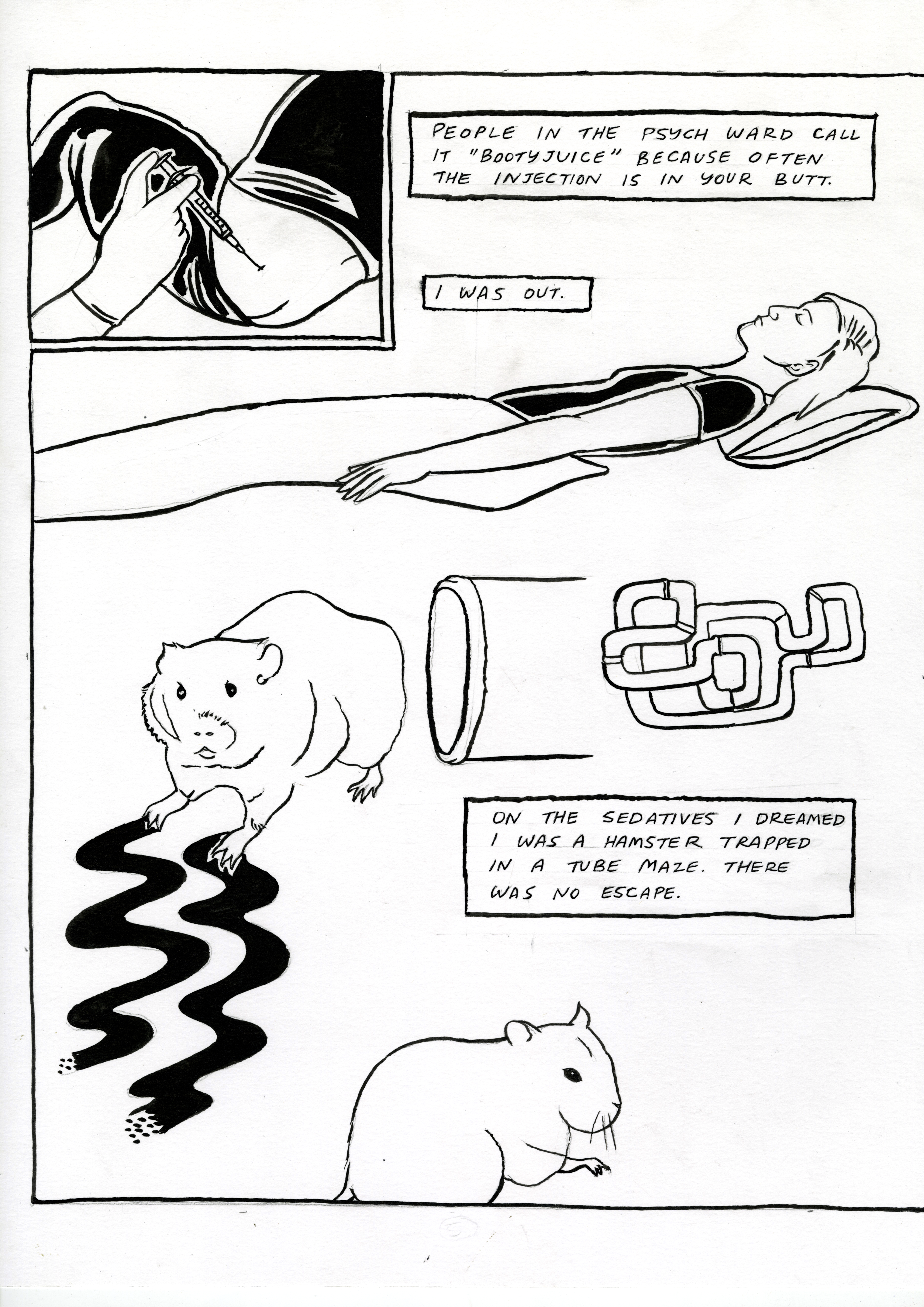
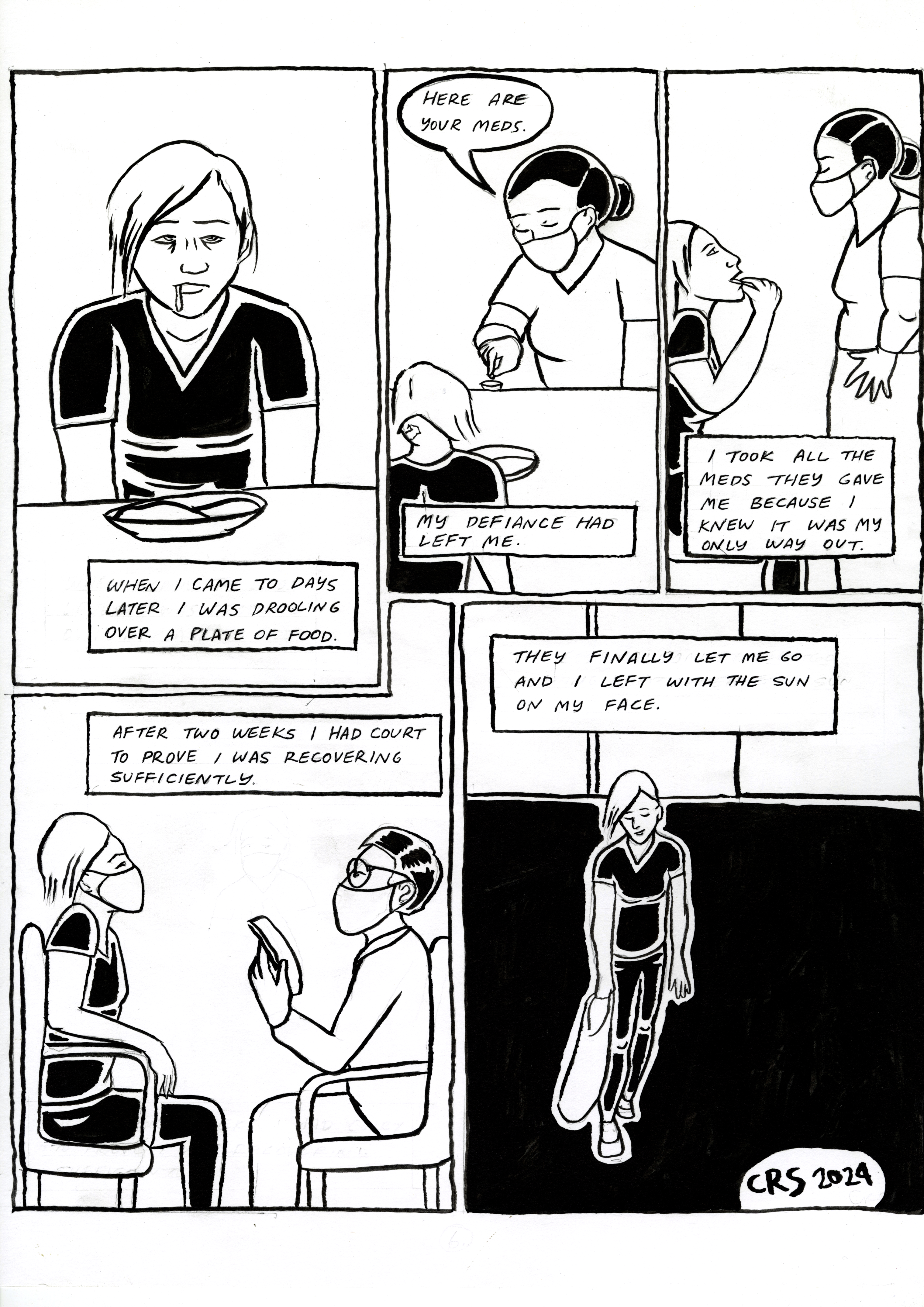
The conflation of mental illness, houselessness, and criminality runs deep and unchecked. Administered under these terms, “treatment” is enforced compliance with disappearance from public space, and with pharmaceutical and behavior modification regimens that demand docility. Such technologies of compliance include not only medication but also “shelter” (forced upon even people who are housed), the involuntary three-day psychiatric hold (frequently extended to two weeks), the treatment plan (often irrelevant to the subject’s life path), and the spit hood.
The following narrative is based on a psychiatric hold in 2016 in California. It is drawn from memory, in spite of the latter’s fading from psych meds. Countless people experience this every day.